

How Many Pieces To A Chess Set

A chess piece, or chessman, is a game piece that is placed on a chessboard to play the game of chess. It tin can exist either white or blackness, and it tin can exist one of six types: rex, queen, rook, bishop, knight, or pawn.
Chess sets generally come up with xvi pieces of each color. Additional pieces, usually an extra queen per color, may be provided for use in promotion.
Number of pieces [edit]
  | King |
|---|---|
  | Queen |
  | Rook |
  | Bishop |
  | Knight |
  | Pawn |
Each player begins with sixteen pieces (but see the subsection below for other usage of the term piece). The pieces that vest to each player are distinguished by color: the lighter colored pieces are referred to as "white" and the player that owns them as "White", whereas the darker colored pieces are referred to as "black" and the player that owns them every bit "Blackness".
In a standard game, each of the ii players begins with the following sixteen pieces:
- 1 king
- 1 queen
- 2 rooks
- 2 bishops
- 2 knights
- 8 pawns
Usage of the term piece [edit]
The give-and-take "slice" has three meanings, depending on the context.[1]
- It may mean whatever of the physical pieces of the prepare, including the pawns. When used this fashion, "piece" is synonymous with "chessman" or simply "human being".[2] [3] Chess sets have been fabricated in a variety of styles, sometimes for decorative or creative purposes rather than practical play, but the Staunton pattern is standard for contest.
- In play, the term is normally used to exclude pawns, referring only to a queen, rook, bishop, knight, or male monarch. In this context, the pieces can be broken downward into three groups: major pieces (queen and rooks), minor pieces (bishops and knights), and the king.[4]
- In phrases such as "winning a piece", "losing a slice" or "sacrificing a piece" and other related contexts, it refers only to minor pieces (bishops or knights). Past convention, the queen, rooks, and pawns are specified by name in these cases – for example, "winning a queen", "losing a rook", or "sacrificing a pawn".[5]
Moves of the pieces [edit]
| a | b | c | d | e | f | grand | h | ||
| 8 | | eight | |||||||
| 7 | 7 | ||||||||
| 6 | 6 | ||||||||
| 5 | 5 | ||||||||
| 4 | 4 | ||||||||
| iii | three | ||||||||
| 2 | 2 | ||||||||
| i | one | ||||||||
| a | b | c | d | east | f | g | h | ||
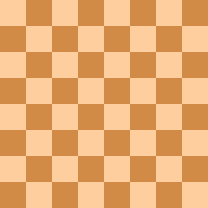


Chess starting position. Squares are referenced using algebraic notation.
The rules of chess prescribe the moves each blazon of chess slice can make. During play, the players take turns moving their ain chess pieces.
- The rook may move whatever number of squares vertically or horizontally without jumping. It likewise takes function, along with the rex, in castling.
- The bishop may move any number of squares diagonally without jumping. Consequently, a bishop stays on squares of the same color throughout the game.
- The queen may move any number of squares vertically, horizontally, or diagonally without jumping.
- The king may move to any adjoining square. No motility may be fabricated such that the male monarch is placed or left in check. The rex may participate in castling, which is a motility consisting of the king moving two squares toward a aforementioned-colored rook on the same rank and the rook moving to the square crossed by the king. Castling may only be performed if the king and rook involved are unmoved, if the king is not in check, if the king would non travel through or into check, and if there are no pieces betwixt the rook and the king.
- The knight moves from i corner of any two-by-three rectangle to the opposite corner. Consequently, the knight alternates its foursquare colour each fourth dimension it moves. It is not obstructed by other pieces.
- The pawn may motion forward one foursquare, and one or two squares when on its starting square, toward the opponent's side of the board. When there is an enemy piece one square diagonally ahead of a pawn, then the pawn may capture that piece. A pawn tin perform a special blazon of capture of an enemy pawn called en passant ("in passing"), wherein it captures a horizontally adjacent enemy pawn that has merely advanced two squares as if that pawn had just advanced i square. If the pawn reaches a square on the back rank of the opponent, it promotes to the player's choice of a queen, rook, bishop, or knight of the same color.[6]
Pieces other than pawns capture in the same way that they motility. A capturing slice replaces the opponent slice on its square, except for an en passant capture by a pawn. Captured pieces are immediately removed from the game. A square may hold only one piece at any given fourth dimension. Except for castling and the knight's move, no slice may jump over another piece.[7]
Relative value [edit]
The value assigned to a piece attempts to represent the potential strength of the piece in the game. Every bit the game develops, the relative values of the pieces will too modify. For instance, in an open game , bishops are relatively more valuable; they can exist positioned to control long, open diagonal spaces. In a closed game with lines of protected pawns blocking bishops, however, knights normally become relatively more potent. Similar ideas use to placing rooks on open files and knights on agile, central squares . The standard valuation is i signal for a pawn, three points for a knight or bishop, v points for a rook, and nine points for a queen.[8] These values are reliable in endgames, particularly with a limited number of pieces. Just these values can alter depending on the position or the phase of the game (opening, middle game, or ending). A bishop pair for case, is worth an boosted half-pawn on average.[9] In specific circumstances, the values may be quite unlike: sometimes a knight can be more valuable than a queen if a particular angle is required for a mating set on, such as certain smothered mates. The apprehensive pawn becomes more and more valuable the closer it is to securing a queen promotion for another example.
History [edit]
Chess evolved over time from its primeval versions in Bharat and Persia to variants that spread both West and East. Pieces inverse names and rules too; the most notable changes was the Vizir (or Firz) becoming the Queen, and the Elephant becoming the Bishop in European versions of chess. The motility patterns for Queens and Bishops likewise inverse, with the earliest rules restricting elephants to just two squares along a diagonal, but assuasive them to "jump" (seen in the fairy chess slice the alfil); and the earliest versions of queens could simply motion a single foursquare diagonally (the fairy chess piece Ferz). The modern bishop'due south movement was popularized in the 14th and 15th centuries, and the modernistic queen was popularized in the 15th and 16th centuries, with versions with the more powerful modernistic queen eclipsing older variants.
- Sample Medieval chess pieces
-

A pawn of quartz from 10th–11th century (Fatimid Arab republic of egypt?). Islamic chess sets favored abstract designs.
-

A knight made effectually 1250 in London, England. The knight is battling an evil dragon.
-
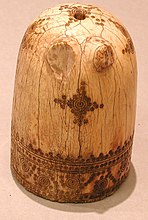
An elephant from the 11th–twelfth century Islamic Western Mediterranean (peradventure Nasrid Granada?). Information technology bears similarities to a Bishop's miter, maybe explaining the eventual terminology shift.
-
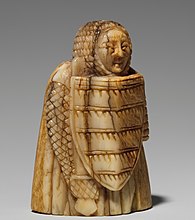
A 12th century warder (mod rook) made of whale ivory of Scandinavian origin, similar to the famous Lewis chessmen.
-

A 13th century Queen astride a equus caballus with attendants, of Scandinavian origin. The Queen replaced the Western farsi Vizier in European chess.
-

An eighth–10th century King (Shah) carved of jet. In the Islamic manner, it is an abstruse representation, decorated with dot-and-circle devices.
Piece names [edit]
The characters implied by pieces' names vary betwixt languages. For example, in many languages, the piece known in English language every bit the "knight" ofttimes translates as "horse", and the English language "bishop" frequently translates as "elephant" in language areas that adapted the modern bishop'southward movement pattern, but non its new proper noun.[10]
| Language | Rex | Queen | Rook | Bishop | Knight | Pawn | Chess | Check | Checkmate/Mate |
|---|---|---|---|---|---|---|---|---|---|
| figure | ♔ ♚ | ♕ ♛ | ♖ ♜ | ♗ ♝ | ♘ ♞ | ♙ ♟ | n/a | + or † | # or ++ or ‡ |
| Afrikaans | Thousand Koning king | D Dame lady | T Toring tower | L Loper runner | R Ruiter rider | (P) Pion | Skaak | Skaak | Skaakmat |
| Albanian | M Mbreti male monarch | D Dama / Mbretëresha lady / queen | T Torra belfry | F Fili / Oficeri elephant / officer | K Kali horse | (U) Ushtari soldier | Shahu | Shah | Shah mat |
| Standard arabic | م مَلِك (malik) king | و وزير (wazïr) vizier | ر رخ / طابية (rukhkh / ṭābiya) fortress / castle | ف فيل (fīl) elephant | ح حصان (ħiṣān) horse | ب بيدق / عسكري (baidaq / `askarī) pawn / soldier | شطرنج (shaṭranj) | كِش مَلِك (kish malik) | كِش مات (kish māt) |
| Azerbaijani | Ş Şah shah | Five Vəzir vizier | T Peak cannon | F Fil elephant | A At equus caballus | P Piyada foot soldier | Şahmat | şah shah | mat mat |
| Armenian | Ա Արքա (Ark῾a) king | Թ Թագուհի (T῾agowhi) queen | Ն Նավակ (Navak) ship | Փ Փիղ (P῾ił) elephant | Ձ Ձի (Dzi) horse | Զ Զինվոր (Zinvor) soldier | Շախմատ (Šaxmat) Ճատրակ (Čatrak) | Շախ (Šax) | Մատ (Mat) |
| Basque | E Erregea king | D Dama lady | G Gaztelua castle | A Alfila | Z Zalduna knight | (P) Peoia pawn | Xake | Xake | Xake mate |
| Byelorussian (Taraškievica) | К кароль king | Вз візыр vizier | Лд ладзьдзя gunkhole | А афіцэр officer | В вершнік rider | (Л) латнік pawn | Шахматы | Шах | Мат |
| Bengali | R রাজা (rājā) Rex | G মন্ত্রী (montri) Minister | N নৌকা (noukā) Boat | H গজ / হাতি (gôj / hāti) Elephant | Thou ঘোড়া (ghoṛā) Horse | B বোড়ে / সৈন্য (boṛe / śoinno) Walker/Troop | দাবা (dābā) | কিস্তি (kisti) Cheque | কিস্তিমাত (kistimāt) Checkmate |
| Bulgarian | Ц цар king | Д дама lady | Т топ cannon | О офицер officer | К кон horse | (П) пешка | Шахмат / Шах | Шах | (Шах и) мат |
| Catalan | R rei | D dama / reina lady / queen | T torre tower | A alfil | C cavall horse | (P) peó | Escacs | Escac / Xec | Escac i mat |
| Chinese | G 王 (wáng) king | Q 后 (hòu) queen | R 車 (jū) chariot | B 象 (xiàng) elephant | Due north 馬 (mǎ) equus caballus | (P) 兵 (bīng) soldier | 國際象棋 (guójì xiàngqí) international chess | 將軍 (jiāngjūn) | 將死 (jiāng sǐ) |
| Czech | K král king | D dáma lady | 5 věž tower | Southward střelec shooter | J jezdec rider | (P) pěšec foot soldier | Šachy | Šach | Mat |
| Danish | K konge king | D dronning queen | T tårn belfry | 50 løber runner | South springer jumper | (B) bonde peasant | Skak | Skak | Skakmat |
| Dutch | K koning male monarch | D matriarch / koningin lady / queen | T toren / kasteel tower / castle | L loper / raadsheer runner / counsellor | P paard horse | (pi) pion | Schaken | Schaak | Mat / Schaakmat |
| English language | K king | Q queen | R rook, castle | B bishop | N knight | (P) pawn | Chess | Check | Checkmate / Mate |
| Esperanto | R reĝo king | D damo lady | T turo tower | Grand kuriero courier | Ĉ ĉevalo horse | (P) peono | Ŝako | Ŝak | Ŝakmato |
| Estonian[eleven] | K kuningas rex | Fifty lipp flag | V vanker chariot / carriage | O oda spear | R ratsu riding horse | (Due east) ettur forwarder | Male later on malev | Tuli / Šahh burn | Matt |
| Finnish | K kuningas king | D daami / kuningatar lady / queen | T torni tower | 50 lähetti messenger | R ratsu ride | (S) sotilas soldier | Shakki | Shakki | Matti / Shakkimatti |
| French | R roi king | D matriarch lady | T tour tower | F fou jester | C condescending rider | (P) pion | Échecs | Échec | Échec et mat |
| Galician | R rei king | D dama / raíña lady / queen | T torre tower | B bispo bishop | C cabalo equus caballus | (P) peón foot soldier | Xadrez | Xaque | Xaque mate |
| Georgian | მფ მეფე (mep'due east) male monarch | ლ ლაზიერი (lazieri) queen | ე ეტლი (etli) chariot | კ კუ (ku) tortoise | მ მხედარი (mkhedari) rider | პ პაიკი (paiki) pawn | ჭადრაკი (Čadraki) | ქიში (K'ishi) | შამათი (Shamat'i) |
| German[12] | K König king | D Dame lady / queen | T Turm tower | Fifty Läufer runner | Due south Springer jumper | (B) Bauer peasant | Schach | Schach | Matt / Schachmatt |
| Greek | Ρ βασιλιάς (vasiliás) male monarch | Β βασίλισσα (vasílissa) queen | Π πύργος (pýrgos) tower | Α αξιωματικός (axiomatikós) officer | Ι ίππος (íppos) horse | (Σ) πιόνι (pióni) pawn | Σκάκι (Skáki) | Σαχ (Sach) | Mατ (Mat) |
| Hindi | R राजा (rājā) rex | Five वज़ीर / रानी (vazīr / rānī) vizier / queen | H हाथी (hāthī) elephant | O ऊँट (ūṁṭ) camel | G घोड़ा (ghoṛā) horse | (P) प्यादा (pyādā) infantryman | शतरंज (Shatranj) | शह (Shah) | शहमात (Shahmāt) |
| Hebrew | מ מלך (Melech) rex | מה מלכה (Malka) queen | צ צריח (Tzariach) tower | ר רץ (Ratz) runner | פ פרש (Parash) horseman | רגלי (Regli) foot soldier | שחמט (Shakhmat) | שח (Shakh) | מט (Mat) |
| Hausa | S sarki king | Q sarauniya queen | R sansanin fortress | Thousand giwa elephant | J jarumi mounted warrior | (P) soja soldier | ces | ceki | ceki mat |
| Hungarian | One thousand király king | V vezér / királynő vizier / queen | B bástya bastion | F futó runner | H huszár / ló hussar / horse | (Gy) gyalog / paraszt footman / peasant | Sakk | Sakk | Matt |
| Icelandic | K kóngur king | D drottning queen | H hrókur rook | B biskup bishop | R riddari knight | (P) peð pawn | Skák | Skák | Skák og mát |
| Ido | R rejo rex | D damo lady | T turmo tower | E episkopo bishop | K kavalo horse | (P) piono | Shakoludo | Shako | Shakmato |
| Indonesian | R raja king | M menteri government minister / vizier | B benteng castle / fortress | Grand gajah elephant | 1000 kuda horse | (P) pion | Catur | Sekak / Ster | Sekakmat |
| Interslavic | 1000 kralj king | C carica / dama empress / lady | Z zamok / věža castle / tower | L lovec hunter | J jezdec / konj rider / horse | (P) pěšak infantryman | Šahy | Šah | Mat |
| Irish | R rí king | B banríon queen | C caiseal barrier | East easpag bishop | D ridire knight | (F) fichillín / ceithearnach little chess piece / kern | Ficheall | Sáinn | Marbhsháinn |
| Italian | R re rex | D donna / regina lady / queen | T torre tower | A alfiere standard-bearer | C cavallo horse | (P) pedone pes soldier | Scacchi | Scacco | Scacco matto |
| Japanese | Yard キング (kingu) | Q クイーン (kuīn) | R ルーク (rūku) | B ビショップ (bishoppu) | North ナイト (naito) | (P) ポーン (pōn) | チェス (chesu) | 王手 (ōte) / チェック (chekku) | 詰み (tsumi) / チェックメイト (chekkumeito) |
| Javanese | R raja king | Q ratu / perdhana mentri queen / prime minister | B bèntèng fortress | Yard mentri minister | Thou jaran horse | (P) pion | sekak | ||
| Kannada | ರಾ ರಾಜ (raaja) rex | ಮ ಮಂತ್ರಿ (mantri) minister | ಆ ಆನೆ (aane) elephant | ರ ರಥ (ratha) chariot | ಕು ಕುದುರೆ (kudure) horse | ಪಾ ಪಾದಾತಿ (paadaati) human foot sodier | |||
| Kazakh | Кр патша (patsha) rex | У уәзір (wazir) vizier | Т тура (tura) belfry | П піл (pil) elephant | А ат (at) equus caballus | (П) пешка (peshka) / (С) сарбаз (sarbaz) pes soldier / warrior | шахмат (shakhmat) | шах (shakh) | мат (mat) |
| Korean | K 킹 (king) | Q 퀸 (kwin) | R 룩 (rug) | B 비숍 (bi syob) | Northward 나이트 (na i teu) | (P) 폰 (pon) | 체스 (che seu) | 체크 (che keu) | 체크메이트 (che keu me i teu) |
| Latin | R rex king | M regina queen | T turris / elephas belfry / elephant [thirteen] | A signifer / cursor / stultus / alphinus standard-bearer / messenger / fool [thirteen] | Eastward eques knight | (P) pedes / pedo foot soldier | Scacci | Scaccus | Mattus |
| Latvian | One thousand karalis king | D dāma lady | T tornis tower | 50 laidnis | Z zirgs horse | (B) bandinieks peasant | Šahs | Šahs | Šahs un mats |
| Lithuanian | K karalius male monarch | V valdovė queen | B bokštas tower | R rikis Lithuanian military commander | Ž žirgas horse | (P) pėstininkas pawn | Šachmatai | Šach | Matas |
| Lojban | Na noltrunau king | Ni noltruni'u queen | S slanydi'u castle | 10 xanto elephant | Xi xirma horse | (S) sonci soldier | caxmati | gunta assault | lo nolraitru cu morsi the male monarch is dead |
| Luxembourgish | Chiliad Kinnek male monarch | D Damm lady | T Tuerm tower | L Leefer runner | P Päerd horse | (B) Bauer farmer | Schach | Schach | Schachmatt |
| Macedonian | K крал rex | D кралица / дама queen / lady | T топ cannon | 50 ловец hunter | S коњ / скокач horse / jumper | P пешак / пион infantryman / pawn | шах | шах | мат |
| Malayalam | 1000 രാജാവ് (rajavu) king | Q മന്ത്രി (manthri) government minister | R തേര് (theru) chariot | B ആന (anaa) elephant | N/Kt കുതിര (kuthira) horse | (P) കാലാള് / പടയാളി (kalal / padayali) pes soldier | ചതുരംഗം (chathurangam) | ചെക്ക് | ചെക്ക് മേറ്റ് |
| Marathi | R राजा (rājā) king | V वजीर (vajīr) vizier | H हत्ती (hātti) elephant | O उंट (Unṭ) camel | Thousand घोडा (ghoḍā) horse | (P) प्यादे (pyāde) pes soldier | बुद्धिबळ (buddhibal) | शह (shah) | शहमात (shahmāt) |
| Mongolian | Н ноён noyan | Б бэрс (fers) vizier | т тэрэг (tereg) chariot | Т тэмээ (temee) camel | М морь (mor) horse | (Х) хүү (hüü) boy | Шатар | шаг / дуг / цод | мад |
| Norwegian Bokmål | Thou konge king | D dronning queen | T tårn tower | L løper runner | S springer jumper | (B) bonde peasant | Sjakk | Sjakk | Sjakkmatt |
| Norwegian Nynorsk | K konge king | D dronning queen | T tårn tower | L løpar runner | Due south springar jumper | (B) bonde peasant | Sjakk | Sjakk | Sjakkmatt |
| Odia | K ରଜା (rôja) king | Q ରାଣୀ (raṇi) queen | R ଡଙ୍ଗା (ḍôṅga) boat | B ହାତୀ (hati) elephant | Due north ଘୋଡ଼ା (ghoṛa) horse | P ସୈନିକ (sôinikô) soldier | ଚେସ୍/ଶତରଞ୍ଜ (chess/śôtôrôñjô) | ଚେକ୍ (bank check) | ଚେକମେଟ୍ (checkmate) |
| Western farsi | ش شاه rex | و وزیر vizier / minister | ق/ر قلعه/رخ castle | ف فیل elephant | ا اسب horse | س سرباز soldier | شطرنج | کیش (kish) | مات (mat) |
| Polish | Thousand król king | H hetman | W wieża tower | Chiliad goniec courier | S skoczek jumper | (P) pion pawn | szachy | szach | mat / szach-mat |
| Portuguese | R rei king | D dama / rainha lady / queen | T torre tower | B bispo bishop | C cavalo horse | (P) peão pes soldier | Xadrez | Xeque | Xeque-mate |
| Romanaian | R rege male monarch | D damă / regină lady / queen | T turn / tură belfry | N nebun fool | C cal equus caballus | (P) pion | Șah | Șah | Mat / Șah mat |
| Russian | Кр король (korol') king | Ф ферзь / королева (ferz' / koroleva) vizier / queen | Л ладья (ladya) boat | С слон (slon) elephant | К конь (kon') horse | (П) пешка (peshka) | шахматы (shakhmaty) | шах (shakh) | мат (mat) |
| Scottish Gaelic | R righ king | B bànrigh queen | T tùr belfry | East easbaig bishop | D ridir knight | (P) pàn pawn | feòirne | casg | tul-chasg |
| Serbo-Croation | К краљ (kralj) rex | Д краљицa / дама (kraljica / dama) queen / lady | Т топ (acme) cannon | Л ловац (lovac) hunter | С скaкaч / коњ (skakač / konj) jumper / equus caballus | (П) пешак / пион (pešak / pion) pedestrian / pawn | Шах (Šah) | Шах (Šah) | Мат (Mat) |
| Northern Sotho | К Kgoši | Kg Kgošigadi | N Ntlosebô / Moshate | Mp Mopišopo | M Mogale | Southward Seitšhireletšo | Tšhêšê | Check | Checkmate |
| Sicilian | R re rex | D riggina queen | T turru tower | A alferu | S scecc[h]u donkey | (P) pidinu pes soldier | Scacchi | ||
| Slovak | K kráľ king | D dáma lady | V veža tower | Southward strelec shooter | J jazdec rider | (P) pešiak infantryman / pawn | Šach | Šach | Mat / Šachmat |
| Slovene | K kralj male monarch | D dama lady | T trdnjava castle | L lovec hunter | S skakač jumper | (P) kmet farmer | Šah | Šah | Mat / Šahmat |
| Spanish | R rey king | D dama / reina lady / queen | T torre tower | A alfil | C caballo equus caballus | (P) peón foot soldier | Ajedrez | Jaque | Jaque mate |
| Swedish | K kung king | D dam / drottning lady / queen | T torn tower | 50 löpare runner | H häst / riddare horse/knight | (B) bonde peasant | Schack | Schack | Schack matt |
| Tamil | Yard அரசன் (arasaṉ) king | Q அரசி (araci) queen | R கோட்டை (kōṭṭai) castle | B அமைச்சர் / மந்திரி (amaicchar / manthiri) minister | N/Kt குதிரை (kutirai) horse | (P) காலாள் / சிப்பாய் (kālāḷ / cippāy) pes soldier / sepoy | சதுரங்கம் (sathurankam) | முற்றுகை (muṟṟukai) | இறுதி முற்றுகை (iṟuti muṟṟukai) |
| Telugu | రాజు (rāju) male monarch | మంత్రి (maṃtri) government minister | ఏనుగు (ēnugu) elephant | శకటు (śakaţu) | గుర్రం (gurraṃ) horse | బంటు (baṃţu) soldier | చదరంగం (cadaraṃgaṃ) | దాడి (dāḍi) | కట్టు (kaţţu) |
| Thai | ข ขุน (khun) king | ต เม็ด / ตรี / มนตรี (met / trī / montrī) counselor | ร เรือ (reūa) send | ค โคน (khōn) | ม ม้า (mā) equus caballus | (บ) เบี้ย (bīa) menial | หมากรุก (mākruk) | รุก (ruk) | จน (jon) |
| Turkish | Ş/Thou şah / kral shah / rex | V vezir vizier | K kale castle | F fil elephant | A at horse | (P) er / piyon soldier / pawn | Satranç | Şah | Mat |
| Ukrainian | Kр король (korol) king | Ф ферзь (ferz) vizier | T тура (tura) tower | C слон (slon) elephant | K кінь (kin) horse | (П) пішак / пішка (pishak / pishka) foot soldier | Шахи (shakhi) | Шах (shakh) | Мат (mat) |
| Urdu | بادشاہ (bādshāh) | وزیر (vazīr) | رخ (rukh) | فيلہ (fiyalah) | گھوڑا (ghōṛā) | پیادہ (pyādah) | شطرنج (šaṭranj) | شہ (sheh) | شہمات (shehmāt) |
| Vietnamese | Five vua male monarch | H hậu queen | 10 xe chariot | T tượng elephant | One thousand mã horse | tốt soldier | Cờ vua | Chiếu | Chiếu bí / Chiếu hết |
| Welsh | T teyrn / brenin lord / king | B brenhines queen | C castell castle | E esgob bishop | Grand marchog rider | (M) gwerinwr peasant | Gwyddbwyll | Siach | Siachmat |
Variant pieces [edit]
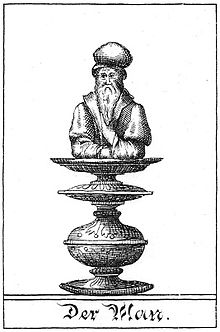
A 1616 analogy of the Mann, a chess piece unique to the Courier Chess variant; the Isle of man moves like a King, but threatening it does not requite check, and it can be captured without loss of the game.
Chess variants sometimes include new, non-standard, or even old pieces. For case, Courier Chess, a predecessor of modern chess dating from the twelfth century, was played on an 8x12 board and used all half dozen mod chess piece types, plus three additional types of pieces: Courier, Isle of man (or rath or sage), and Jester. Variants of "old" chess might utilise the onetime rules for bishops/elephants with the alfil piece, or one-time rules for Queens with the ferz. Many modernistic variants with unorthdox pieces exist, such as Berolina chess which uses custom pawns that advance diagonally and capture vertically.
See as well [edit]
- Chess set
- Chessboard
- Chess slice relative value
- Chess symbols in Unicode
- Fairy chess piece – a piece used just in chess variants
- History of chess
- Lewis chessmen
- Outline of chess
- Rules of chess
- Staunton chess set
Notes [edit]
- ^ (Burgess 2009:523)(Hooper & Whyld 1992:307)
- ^ (Hooper & Whyld 1992:307)
- ^ (Hooper & Whyld 1987:200) harvcol fault: no target: CITEREFHooperWhyld1987 (help)
- ^ (Brace 1977:220)
- ^ (Simply & Burg 2003:5)
- ^ (Just & Burg 2003:13–16)
- ^ (Only & Burg 2003:13–xvi)
- ^ (Hooper & Whyld 1992:438–39)
- ^ (Soltis 2004:183)
- ^ (Luiro 2009)
- ^ The Estonian chess terms were coined past Ado Grenzstein.
- ^ "Handbook". world wide web.fide.com . Retrieved 22 March 2022.
The pieces carry the names: Koenig, Dame, Turm, Laeufer, Springer, Bauer
- ^ a b H. J. R. Murray, A History of Chess, ch. xi
References [edit]
- Brace, Edward (1977), An Illustrated Dictionary of Chess, Craftwell, ISBN1-55521-394-4
- Burgess, Graham (2009), The Mammoth Book of Chess (3rd ed.), Running Press, ISBN978-0-7624-3726-9
- Evans, Larry (1973), Evans on Chess, Cornerstone Library, ISBN0-87749-699-4
- Hooper, David; Whyld, Kenneth (1992), "Value of pieces", The Oxford Companion to Chess (second ed.), Oxford University Press, ISBN0-19-280049-3
- Just, Tim; Burg, Daniel South. (2003), U.S. Chess Federation'south Official Rules of Chess (5th ed.), McKay, ISBN0-8129-3559-iv
- Soltis, Andrew (2004), Rethinking the Chess Pieces, Batsford, ISBN0-7134-8904-9
- Luiro, Ari (2009), Chess pieces in different languages, archived from the original on Oct 21, 2009, retrieved 2011-11-04
External links [edit]
- FIDE on chess equipment
- History of Staunton Chess Pieces
- Chess pieces in different languages
- Online "Chess Museum" with many celebrated examples
- How chess pieces are made and constructed
- DIY: How to brand a wooden chess pieces [sic]
Source: https://en.wikipedia.org/wiki/Chess_piece
0 Response to "How Many Pieces To A Chess Set"
Post a Comment